

|
Khiabanian Lab |
introduction | research | team | publications | software | lab news, etc. | contact |
Lab members (alumni)
 Hossein Khiabanian was an Associate Professor in the Department of
Pathology and Laboratory Medicine at Rutgers Robert Wood Johnson
Medical School. He joined Rutgers Cancer Institute in 2015 and directed an
independent research program supported by the National Cancer
Institute, the V Foundation, American Cancer Society, and other
philanthropic foundations. He was a member of the
Departments of Systems Biology and Biomedical Informatics at
Columbia University, and received his Ph.D. in Physics from
Brown University where he studied galaxy clusters and dark matter
structures using weak gravitational lensing. He is a photography
enthusiast.
Hossein Khiabanian was an Associate Professor in the Department of
Pathology and Laboratory Medicine at Rutgers Robert Wood Johnson
Medical School. He joined Rutgers Cancer Institute in 2015 and directed an
independent research program supported by the National Cancer
Institute, the V Foundation, American Cancer Society, and other
philanthropic foundations. He was a member of the
Departments of Systems Biology and Biomedical Informatics at
Columbia University, and received his Ph.D. in Physics from
Brown University where he studied galaxy clusters and dark matter
structures using weak gravitational lensing. He is a photography
enthusiast.
 Mona Arabzadeh was a Postdoctoral Fellow of the New Jersey Commission on Cancer Research at Rutgers Cancer
Institute. She received her Ph.D. in Computer Engineering from
Amirkabir University of Technology, Tehran, Iran. At Rutgers, she led the discovery of the first quantitative evidence for the clinical impact of blood cells mutated due to age-associated clonal hematopoiesis on systemic cancer treatment. She also developed novel model for assessing patterns of allelic expression in tumors leading to the identification of a group of previously classified patients with poor overall survival.
Mona Arabzadeh was a Postdoctoral Fellow of the New Jersey Commission on Cancer Research at Rutgers Cancer
Institute. She received her Ph.D. in Computer Engineering from
Amirkabir University of Technology, Tehran, Iran. At Rutgers, she led the discovery of the first quantitative evidence for the clinical impact of blood cells mutated due to age-associated clonal hematopoiesis on systemic cancer treatment. She also developed novel model for assessing patterns of allelic expression in tumors leading to the identification of a group of previously classified patients with poor overall survival.
 Amartya Singh was a Postdoctoral Fellow of the New Jersey Commission
on Cancer Research and a Ph.D. graduate of
the Department of Physics and Astronomy at Rutgers
University. During his doctoral and postdoctoral research, he worked on developing
novel biclustering algorithms to investigate the systems level biology of cancer, and developed methods to connect genomic and
epigenetic properties of tumors with their transcriptomic phenotypes at single-cell resolutions.
Amartya Singh was a Postdoctoral Fellow of the New Jersey Commission
on Cancer Research and a Ph.D. graduate of
the Department of Physics and Astronomy at Rutgers
University. During his doctoral and postdoctoral research, he worked on developing
novel biclustering algorithms to investigate the systems level biology of cancer, and developed methods to connect genomic and
epigenetic properties of tumors with their transcriptomic phenotypes at single-cell resolutions.
 Byron Avihai is an M.D.-Ph.D. candidate at the Rutgers and Princeton University M.D.-Ph.D. Program. He received his undergraduate degree in Mathematics and Physics from the Ecole Polytechnique de Paris, and his graduate degree in Genetics from the Ecole Normale Supérieure de Paris. He is a member of the Herranz Lab and is interested in identifying markers of therapeutic resistance in pediatric leukemia.
 Christopher Thai received his Ph.D. in the Quantitative
Biomedicine at Rutgers University in 2026, where he was a fellow of the Biotechnology Training Program and and a member of the Herranz Lab.
He received his bachelor's in Computer Science from UCLA and during
his doctoral research developed computational methods for guiding clustering and annotation in single-cell RNA sequencing.
Christopher Thai received his Ph.D. in the Quantitative
Biomedicine at Rutgers University in 2026, where he was a fellow of the Biotechnology Training Program and and a member of the Herranz Lab.
He received his bachelor's in Computer Science from UCLA and during
his doctoral research developed computational methods for guiding clustering and annotation in single-cell RNA sequencing.
 Mingyang Ma received her Ph.D. from the Department of Physics and Astronomy at Rutgers University in 2025. She
earned her Bachelor of Arts in Physics and Mathematics from Rutgers
in 2021 and during her doctoral research worked on developing deep
learning models for inferring gene regulatory networks from
single-cell sequencing data with applications to glioblastoma.
Mingyang Ma received her Ph.D. from the Department of Physics and Astronomy at Rutgers University in 2025. She
earned her Bachelor of Arts in Physics and Mathematics from Rutgers
in 2021 and during her doctoral research worked on developing deep
learning models for inferring gene regulatory networks from
single-cell sequencing data with applications to glioblastoma.
 Vaidhy Mahaganapathy received his Ph.D. in Microbiology
and Molecular Genetics at Rutgers University in 2023. During his doctoral research, he developed bioinformatics approaches for analyzing DNA sequencing data from large patient cohorts to study genomic alteration associated with mutated blood cells (clonal hematopoiesis of indeterminate potential) present in tumor microenvironment.
Vaidhy Mahaganapathy received his Ph.D. in Microbiology
and Molecular Genetics at Rutgers University in 2023. During his doctoral research, he developed bioinformatics approaches for analyzing DNA sequencing data from large patient cohorts to study genomic alteration associated with mutated blood cells (clonal hematopoiesis of indeterminate potential) present in tumor microenvironment.
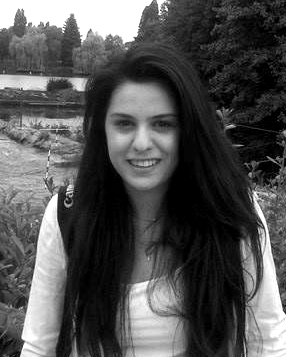 Nahed Jalloul was a Postdoctoral Fellow of the New Jersey Commission on Cancer Research and a Patterson Trust Awardee at Rutgers Cancer
Institute. She led the
development and implementation of information theoretic tools in precision oncology platforms across the Precision Medicine Program for interpreting germline and somatic testing results at molecular tumor boards.
Nahed Jalloul was a Postdoctoral Fellow of the New Jersey Commission on Cancer Research and a Patterson Trust Awardee at Rutgers Cancer
Institute. She led the
development and implementation of information theoretic tools in precision oncology platforms across the Precision Medicine Program for interpreting germline and somatic testing results at molecular tumor boards.
 Saman Zeeshan was a Postdoctoral Fellow at Rutgers Cancer
Institute, working jointly with the lab of Dr. Sharon Pine. She
studied the splicing landscape in lung cancer with a focus on racial
disparities.
Saman Zeeshan was a Postdoctoral Fellow at Rutgers Cancer
Institute, working jointly with the lab of Dr. Sharon Pine. She
studied the splicing landscape in lung cancer with a focus on racial
disparities.
 Jui Wan Loh received her Ph.D. in
Microbiology and Molecular Genetics at Rutgers University in
2021. She was an Pre-doctoral Fellow of the New Jersey Commission on Cancer Researchand a Shatkin Scholar and for her doctoral thesis developed computational approaches for analyzing deep tunmor sequencing to investigate cancer clonal evolution during treatment.
Jui Wan Loh received her Ph.D. in
Microbiology and Molecular Genetics at Rutgers University in
2021. She was an Pre-doctoral Fellow of the New Jersey Commission on Cancer Researchand a Shatkin Scholar and for her doctoral thesis developed computational approaches for analyzing deep tunmor sequencing to investigate cancer clonal evolution during treatment.
 Mohammad Hadigol was a Postdoctoral Fellow of the New Jersey Commission on Cancer Research. At Rutgers, he focused on developing diagnostic pipelines using
calibrated deep-sequencing techniques and their implementation in clinical and precision oncology settings.
Mohammad Hadigol was a Postdoctoral Fellow of the New Jersey Commission on Cancer Research. At Rutgers, he focused on developing diagnostic pipelines using
calibrated deep-sequencing techniques and their implementation in clinical and precision oncology settings.
Visiting members
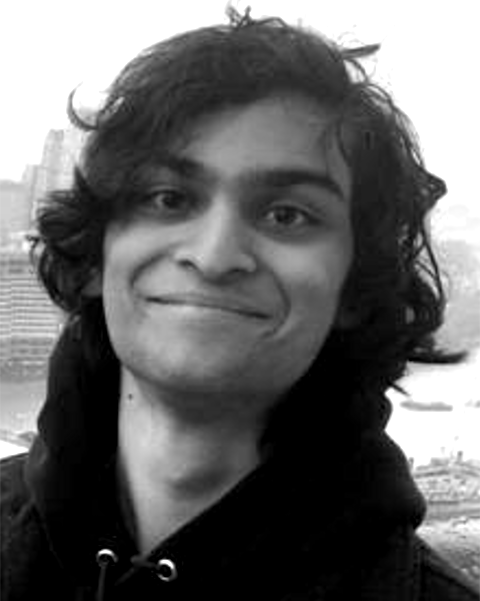 Jay Patwardhan is an undergraduate student in Computer Science and Mathematics at Rutgers University and a 2023 DIMACS fellow. His interests were in computational approaches that facilitate medically relevant findings. He pursued to study mathematics.
 Surabhi Panda was an undergraduate student in Computer Engineering at Rutgers University. She was interested in applying her mathematical and technical skills to serve breakthroughs in medical research. She pursued to study medicine.
 Tasha Hester was a member of the Rutgers Youth Enjoy Science Program and a 10th grade biology teacher. Her focus was on refining her curriculum and pedagogical approaches using biological and statistical concepts.
 Connie Zhang was an undergraduate at Macalester College in St. Paul,
MN. She was a 2021
DIMACS fellow and a research intern in the lab working on biclustering analysis of large tumor cohorts. She pursued to study biostatistics.
Connie Zhang was an undergraduate at Macalester College in St. Paul,
MN. She was a 2021
DIMACS fellow and a research intern in the lab working on biclustering analysis of large tumor cohorts. She pursued to study biostatistics.
 Srinivas Rajagopalan graduated from Rutgers University in Biomathematics
and was a research assistant in the lab working on joint analysis of tumor and normal gene expression datasets. She pursued to study computational biology.
Srinivas Rajagopalan graduated from Rutgers University in Biomathematics
and was a research assistant in the lab working on joint analysis of tumor and normal gene expression datasets. She pursued to study computational biology.
 Lodovico Terzi was a Visiting Scholar at the Rutgers Cancer Institute
from Dr. Davide Rossi's laboratory at the Institute of Oncology Research in Bellinzona
(Switzerland). His research focused on studying
cancer cell adaptation and evolution in leukemia and lymphoma.
Lodovico Terzi was a Visiting Scholar at the Rutgers Cancer Institute
from Dr. Davide Rossi's laboratory at the Institute of Oncology Research in Bellinzona
(Switzerland). His research focused on studying
cancer cell adaptation and evolution in leukemia and lymphoma.
 Ameen Jafferier was an M.S. student in Biomedical Informatics at Rutgers University. His masters thesis
research in the lab was focused on implementing informatics approaches for interpreting clinical
sequencing data.
Ameen Jafferier was an M.S. student in Biomedical Informatics at Rutgers University. His masters thesis
research in the lab was focused on implementing informatics approaches for interpreting clinical
sequencing data.
 Tim Hedspeth was an undergraduate at Emmanuel College in Boston, MA,
and was a 2020
DIMACS fellow. At Rutgers, he working on analyzing single-cell DNA sequencing datasets. He pursued to study biostatistics.
Tim Hedspeth was an undergraduate at Emmanuel College in Boston, MA,
and was a 2020
DIMACS fellow. At Rutgers, he working on analyzing single-cell DNA sequencing datasets. He pursued to study biostatistics.
 Theodora Katsarou graduated from Stony Brook University, and
was a 2019
DIMACS fellow. She majored in Applied
Mathematics and Biology, and pursued to study medicine.
Theodora Katsarou graduated from Stony Brook University, and
was a 2019
DIMACS fellow. She majored in Applied
Mathematics and Biology, and pursued to study medicine.
 Caitlin Guccione graduated from University of Rhode Island
and was a 2018
DIMACS fellow. She receieved her Ph.D. from University of California, San Diego in 2025 studying computer
science and computational biology.
Caitlin Guccione graduated from University of Rhode Island
and was a 2018
DIMACS fellow. She receieved her Ph.D. from University of California, San Diego in 2025 studying computer
science and computational biology.
 Simon Bird was a graduate of the Honors College at Rutgers University
and was a 2017
DIMACS fellow. He studied mathematics, physics, and computer science.
Simon Bird was a graduate of the Honors College at Rutgers University
and was a 2017
DIMACS fellow. He studied mathematics, physics, and computer science.
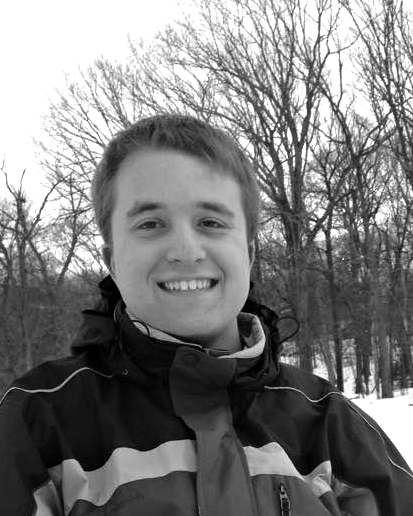 Anthony Fratella-Calabrese is a Summa Cum Laude graduate of the Rutgers School
of Environmental and Biological Sciences. He obtained an M.D. from Rutgers University.
Anthony Fratella-Calabrese is a Summa Cum Laude graduate of the Rutgers School
of Environmental and Biological Sciences. He obtained an M.D. from Rutgers University.
Affiliations
We were affiliated with the Department of Physics and Astronomy, the Molecular Biosciences Graduate Programs, the Institute for Quantitative Biomedicine, and the Center for Quantitative Biology at Rutgers University.
|